Samsung Fridge Repairs
Northern Johannesburg
Independent Samsung appliance specialists. We resolve cooling failures, ice maker faults, compressor and inverter board failures within 2–4 hours — across Sandton, Bryanston, Fourways, Midrand and surrounding areas.

Samsung Refrigerator Types We Repair
From inverter compressors to Bespoke four-door units, our technicians carry Samsung-spec parts and diagnostic tooling for every model in the Samsung refrigeration range.
Samsung Side-by-Side
Samsung side-by-side refrigerators place the freezer and fresh-food compartments vertically side by side behind two full-height doors. The layout depends on a shared inverter compressor, dual evaporator fans and a through-the-door ice and water dispenser. Common failures centre on the dispenser assembly, defrost system and the inverter board driving the compressor. Genuine Samsung dispenser actuators and Samsung-spec inverter boards are essential — generic parts cause repeat ice maker faults within weeks.
Samsung French Door
Samsung French door refrigerators use two upper doors over the fresh compartment and a pull-out bottom freezer drawer. The design runs a single inverter compressor with a variable-speed fan and a multi-sensor temperature array. French door units are sensitive to door-seal integrity and defrost heater continuity; a failed seal or heater causes the freezer to ice while the fridge warms. We carry Samsung door seals cut to model and defrost heaters matched to the evaporator assembly.
Samsung Inverter
Samsung digital inverter refrigerators replace the fixed-speed compressor with a variable-speed inverter compressor driven by an intelligent PCB. The inverter board modulates compressor speed to demand, improving efficiency but introducing a failure point: voltage surges and load-shedding cycles damage the inverter PCB and run capacitor. We diagnose at the board level with a multimeter and oscilloscope, distinguishing a failed inverter board from a seized compressor — the difference between a board swap and a full compressor replacement.
Samsung Bottom Freezer
Samsung bottom-freezer refrigerators place the freezer below the fresh compartment, usually as a pull-out drawer. The configuration uses a single compressor with a damper-controlled air path between compartments. When the defrost system fails, ice blocks the air path and the fridge warms while the freezer over-freezes. We service the defrost heater, bimetal limit and evaporator fan as a matched set to prevent the fault recurring within the warranty period.
Samsung Top Freezer
Samsung top-freezer refrigerators are the traditional two-door layout with the freezer above the fresh compartment. Though simpler, these units still use Samsung's inverter compressor and electronic temperature control. The most common faults are a failed start relay after power surges and an iced evaporator from a defective defrost timer. We carry Samsung-spec start relays and defrost timers to restore these units same day.
Samsung Bespoke
Samsung Bespoke refrigerators are the premium custom-panel range with interchangeable door finishes and advanced inverter cooling. These units require factory-level diagnostic care: the custom panels must be removed and refitted without marking the finish, and only genuine Samsung components are acceptable in a R100,000+ appliance. Our technicians are trained on the Bespoke range and carry the panel-removal tooling to service the inverter board, ice maker and dispenser without cosmetic damage.
Samsung Double Door
Samsung double-door refrigerators are the two-compartment layout with separate freezer and fridge doors and a single shared compressor. The shared cooling loop means a single defrost failure affects both compartments. We diagnose the defrost heater, thermistor and main control board in sequence, restoring the cooling loop and verifying compartment temperatures against Samsung's specification before signing off the repair.
Common Samsung Fridge Faults
Every fault has a specific diagnostic path. Select your symptom to see the repair process, common causes, and the suburb-level landing page for your area.
Not Cooling
A Samsung refrigerator that has stopped cooling is the most urgent callout we handle, and the cause is almost always one of four components. The first suspect is the evaporator fan motor: if it has failed, cold air never circulates from the freezer evaporator into the fresh compartment, so the freezer stays cold while the fridge warms. We test the fan for continuity and bearing drag and replace it with a Samsung-spec motor. The second is the defrost system — a failed defrost heater, bimetal thermostat or defrost sensor allows ice to build over the evaporator until airflow is choked. We measure heater continuity and bimetal opening temperature and replace the failed element. The third is the thermistor: if its resistance drifts, the control board receives the wrong temperature and never calls for cooling. We verify thermistor resistance against the Samsung temperature-resistance chart. The fourth, and most serious, is the inverter compressor or its driving board. Using a multimeter and inverter test tool we determine whether the compressor is electrically intact and whether the inverter board is supplying the correct drive signal. A failed inverter board is a board swap; a seized compressor is a full replacement with a Samsung-spec unit and a new filter drier. Accurate diagnosis is the difference between a same-day fix and an unnecessary R8,000 compressor replacement, which is why we never guess — we measure.
Diagnose & RepairNot Freezing
When a Samsung freezer stops freezing but the fridge compartment still cools, the fault usually points to a sealed-system or defrost issue rather than a fan. The most common cause is an iced-over evaporator coil from a failed defrost cycle: ice insulates the coil so the freezer cannot reach -18°C even though the compressor runs continuously. We thaw the evaporator, test the defrost heater and bimetal, and replace the failed part before reassembling. The second cause is a low refrigerant charge from a micro-leak in the evaporator or a failed process-tube weld. We pressure-test the sealed system with nitrogen, locate the leak, repair the weld or replace the leaking section, evacuate the system and recharge with the exact Samsung-specified refrigerant mass — never a top-up, which masks the leak and guarantees a repeat failure. The third cause is a failing inverter compressor that can no longer reach the pressure differential needed for freezer temperatures; we confirm this with a compressor performance test before recommending replacement. The fourth is a stuck or damaged damper between compartments on multi-airflow models, starving the freezer of cold air. We test damper motor operation and replace the assembly if it has seized. Every not-freezing repair is verified with a calibrated thermocouple reading -18°C or colder in the freezer before we sign off, because a freezer that 'feels cold' but reads -12°C will silently spoil frozen food.
Diagnose & RepairLeaking Water
A Samsung refrigerator leaking water onto the floor is almost always a blocked or frozen defrost drain, not a plumbing leak. During each defrost cycle, meltwater runs down the evaporator drain to the evaporation pan above the compressor. When the drain blocks — usually with ice or biofilm — water overflows into the freezer floor, freezes into a sheet, and eventually spills out under the crisper and onto the kitchen floor. We clear the drain with a controlled heat probe, flush it with a sanitising solution, and fit a Samsung drain-tube heater or silicone duckbill to prevent refreezing. The second cause is a cracked or disconnected water supply line to the ice maker or dispenser, common on side-by-side and French door models. We inspect the full supply path from the saddle valve through the filter housing to the dispenser actuator, replacing any perished tubing with Samsung-spec reinforced line. The third cause is a split water filter housing, which leaks slowly under pressure and is often mistaken for a floor spill; we pressure-test the housing and replace it if cracked. The fourth is a overflowing ice maker that overfills because the water inlet valve does not fully close, producing a continuous trickle into the ice bucket. We test inlet valve closure and replace the valve if it weeps. A water leak is not just a nuisance — it damages flooring and cabinetry, so we treat it as same-day priority.
Diagnose & RepairMaking Noise
An unusually loud Samsung refrigerator is usually signalling a specific mechanical fault, and the character of the noise tells us where to look. A continuous buzzing or humming that worsens over hours points to a failing inverter compressor working against rising head pressure — often the early stage of a sealed-system restriction or a compressor nearing seizure. We measure compressor current draw and discharge pressure before recommending action. A rhythmic clicking every few minutes is the start relay cycling a compressor that cannot start, typically from a failed run capacitor or a seized compressor; we test both and replace the relay first as the cheaper, more common fix. A grinding or squealing from the freezer compartment is an evaporator fan motor with worn bearings, which we replace with a Samsung-spec motor — a generic fan will run but often vibrates against the shroud. A rattling from the rear base is usually the condenser fan or a loose compressor mounting, both quick fixes. A gurgling or hissing is normal refrigerant flow and not a fault. A loud bang when the compressor stops is a failing internal spring inside the compressor housing, which means the compressor must be replaced. We never dismiss a noise — a failing fan or relay left untreated progresses to a compressor failure that costs five times more to repair.
Diagnose & RepairIce Maker Not Working
Samsung ice maker failures fall into four diagnostic categories, and correct identification avoids replacing a working assembly. The first is a frozen ice maker mold: the water inlet valve weeps, overfilling the mold, and the excess freezes the rake mechanism. We replace the inlet valve and thaw the mold rather than replacing the whole assembly. The second is a failed water inlet valve that never opens, so the mold stays empty; we test valve coil resistance and replace the valve with a Samsung-spec unit. The third is a jammed or broken rake motor inside the ice maker module — the ice forms but cannot be ejected. We test the motor gears and replace the ice maker module with a genuine Samsung assembly, never a generic substitute, because the optical level sensor and rake timing are calibrated to the Samsung bucket. The fourth is a frozen supply line to the ice maker, common where the line runs through the freezer; we reroute or fit a line heater. We also check the dispenser auger motor and the bucket switch, because a 'no ice' complaint is sometimes a broken auger that cannot deliver ice already made. Every ice maker repair is verified by running a forced harvest cycle and confirming a full cube ejection before we leave.
Diagnose & RepairFreezer Cold, Fridge Warm
The 'freezer cold, fridge warm' symptom is the signature of an airflow or defrost fault on a Samsung refrigerator, and it is one of the most misdiagnosed issues we see. Because the freezer and fridge share a single cooling source, the fridge depends entirely on cold air being moved from the freezer evaporator. When airflow stops, the freezer stays cold (it is next to the evaporator) while the fridge warms. The most common cause is a fully iced evaporator from a failed defrost cycle — the ice physically blocks the air path. We thaw the coil, test the defrost heater, bimetal and defrost sensor, and replace the failed part. The second cause is a failed evaporator fan motor, so no air moves even when the coil is clear; we replace the fan. The third is a stuck-closed damper on multi-airflow models, which blocks the dedicated air channel to the fridge; we test damper motor operation and free or replace the assembly. The fourth is a drifted thermistor reporting a false cold temperature to the control board, so the board never calls for the damper to open or the fan to run; we verify thermistor resistance and replace it. We never simply 're-gas' this fault — adding refrigerant to an airflow problem does nothing and wastes the customer's money. Every repair is verified with a fridge compartment reading of 4°C or below.
Diagnose & RepairError Code Displayed
Samsung refrigerators display diagnostic error codes on the digital display when the control board detects a sensor or component fault. Reading the code is the fastest path to the failed part. Code 1E or 21E indicates an ice maker sensor or function error — we test the ice maker sensor and module. Code 14E flags an ice maker function error specific to certain models. Code 22E or 22C signals a freezer sensor fault — we test the freezer thermistor resistance. Code 25E points to a defrost sensor or defrost heater failure. Code 40E or 40C indicates a freezer fan motor error; 41E or 41C a condenser fan error. Code 50E or 50C is a fridge sensor fault; 53E a fridge fan error. Code 88 88 across the display is a control board communication fault, often after a power surge. Code PC ER is a main board / sub-board communication error requiring board-level diagnosis. We never clear a code and walk away — the code identifies the failing component, and the underlying fault will recur until that component is repaired. We retrieve the code, diagnose the named component, replace it with a Samsung-spec part, clear the code, and run a full cooling cycle to confirm the code does not return. If your display shows a code, note it before you call — it lets us arrive with the correct part.
Diagnose & RepairTripping Electricity
A Samsung refrigerator that trips the house earth-leakage or circuit breaker is a safety-critical fault and must be diagnosed, not reset repeatedly. The cause is almost always current leaking to earth from a specific component. The most common culprit is the defrost heater: its sheath cracks with age and water ingress, leaking live to earth when the heater energises. We isolate and test the heater for insulation resistance and replace it. The second is the compressor: a winding shorting to the compressor housing trips the breaker on start. We test compressor winding-to-earth resistance and, if it fails, replace the compressor with a Samsung-spec unit and a new filter drier. The third is the ice maker or water valve solenoid, where moisture bridges live to the chassis; we test solenoid insulation and replace the valve. The fourth is a damaged or rodent-chewed wiring loom bridging to the cabinet. We carry out a full insulation-resistance test on every load in the unit to identify the leaking component precisely, rather than guessing and replacing parts that are not at fault. Repeatedly resetting a tripping fridge risks a fire and damages the breaker, so we treat this as an emergency callout and advise switching the unit off at the wall until we arrive.
Diagnose & RepairFrost Buildup
Visible frost or ice buildup inside a Samsung refrigerator is a defrost-system warning, not a cosmetic issue. The defrost cycle runs every 8–12 hours, melting frost off the evaporator coil so airflow stays clear. When the cycle fails, frost accumulates until the coil is a solid block and cooling stops. The defrost system has three active parts: the defrost heater, the bimetal (or defrost thermostat) that switches the heater on at low temperature, and the defrost sensor (thermistor) that tells the control board when to terminate the cycle. We test all three. A failed heater shows open-circuit on a continuity test. A failed bimetal stays open and never lets the heater energise. A drifted defrost sensor reports a false warm temperature, so the board never calls for defrost. We also check the defrost timer or, on inverter models, the control board's defrost logic. Beyond the defrost system, frost buildup on a side-by-side door seal points to a split seal letting humid room air in — we replace the seal with a Samsung-spec gasket formed to the model. We never chip the ice with a sharp tool, which punctures the evaporator; we thaw gently and then repair the failed component so the frost does not return.
Diagnose & RepairWarm Fridge
A Samsung fridge compartment running warm — above the safe 4°C — risks food safety and needs prompt diagnosis. We start by confirming the set temperature and checking the door seals with a paper test: a seal that does grip a closed note is sound; one that lets the note fall is split or perished and is replaced with a model-matched Samsung gasket. Next we examine airflow: on shared-cooling models the fridge depends on the freezer evaporator fan pushing cold air through the damper. A failed fan, a stuck damper or an iced coil all starve the fridge of cold air while the freezer stays cold. We test the fan motor, free or replace the damper, and thaw and repair the defrost system as needed. We then verify the thermistor: a drifted sensor reports a false cold reading and the board never calls for cooling. We check the condenser coils at the rear — dust-clogged coils shed heat poorly and raise compartment temperatures; we clean them. Finally we confirm the inverter compressor is running and reaching operating pressure. A warm fridge is not 'just old age' — it is a specific, repairable fault, and we identify it precisely rather than quoting a replacement appliance.
Diagnose & Repair

We diagnose, we don't guess.
A 'not cooling' Samsung fridge may have a failed fan, an iced evaporator, a drifted thermistor or a dead compressor — each needs a different repair. Our technicians test every component with calibrated instruments before quoting, so you pay for the repair you actually need.
- Inverter board & compressor drive tested with oscilloscope-grade tools
- Thermistors verified against the Samsung temperature-resistance chart
- Sealed-system pressure tested with nitrogen before any recharge
- Defrost heater, bimetal and sensor tested as a matched set
Northern Johannesburg Coverage
Live technician availability across 18 northern suburbs. Select your area for suburb-specific response times and recent repair activity.
How a REYDS Repair Works
Book or Call
Call, WhatsApp or book online. We confirm a slot and dispatch the nearest technician.
Diagnose
On-site component-level diagnosis with calibrated instruments. We identify the exact failure.
Quote
A written quote before any work. Genuine Samsung parts sourced and fitted on-site where possible.
Repair & Verify
Repair completed, compartment temperatures verified against spec, and a 6-month warranty issued.
Samsung Components We Replace
Compressor
The compressor is the heart of a Samsung refrigerator's sealed cooling system — a hermetically sealed pump that compresses refrigerant vapour and circulates it through the evaporator and condenser coils. Samsung uses a digital inverter compressor that varies its speed to demand rather than cycling on and off, which is quieter and more efficient but introduces an inverter drive board as an additional failure point. Compressor faults fall into three categories: mechanical seizure (the pump will not turn), electrical winding failure (open or shorted windings), and inverter board failure (the board does not drive the compressor). We distinguish these with a multimeter and an inverter test tool before recommending any replacement, because a failed inverter board is a board swap while a seized compressor is a full sealed-system repair. When a compressor must be replaced, the repair includes recovering the refrigerant, replacing the filter drier, evacuating the system to a deep vacuum, and recharging with the exact Samsung-specified refrigerant mass — never an estimate. A compressor replacement done without a new filter drier and a proper vacuum will fail again within months as moisture and acid destroy the new pump. We use only Samsung-spec compressors matched to the model's refrigerant and capacity, and every compressor repair carries our 6-month repair warranty. Because a compressor is the single most expensive fridge repair, accurate diagnosis matters: we will not quote a compressor replacement until we have proven the existing one has failed.
Technical OverviewIce Maker
The Samsung ice maker is an electromechanical assembly that times a water fill, freezes it, and ejects the cubes into a bucket. It consists of a mold with an embedded heater, a rake motor with drive gears, a feeler arm or optical sensor that detects a full bucket, and a connection to the water inlet valve. The cycle is controlled either by the ice maker module itself or, on newer models, by the main control board. Ice maker faults are frequently misdiagnosed as a failed assembly when the real fault is upstream. A frozen mold points to a weeping water inlet valve, not a broken ice maker. No ice at all points to a failed inlet valve, a frozen supply line, or a faulty bucket switch. Ice that forms but is not ejected points to a failed rake motor or mold heater. We test each element in sequence — valve closure, supply line temperature, module timing, rake motor resistance, mold heater continuity — before replacing any part. When the ice maker module itself has failed we fit a genuine Samsung assembly, because the rake timing and level-sensor calibration are matched to the Samsung bucket; a generic substitute often overfills or fails to eject. After any ice maker repair we run a forced harvest cycle and confirm a full cube ejection, so the customer sees ice production restored before we leave.
Technical OverviewThermostat / Thermistor
Modern Samsung refrigerators use electronic thermistors rather than mechanical thermostats to sense compartment temperature. A thermistor is a resistor whose resistance falls as temperature rises; the control board reads this resistance and modulates the compressor, fan and damper to hold the set temperature. A drifted thermistor — one whose resistance no longer matches the Samsung temperature-resistance chart — is a common and subtle fault: the fridge may run continuously, short-cycle, or never call for cooling, depending on the direction of the drift. Because the symptom looks like a compressor or fan fault, thermistors are often replaced unnecessarily when the real fault is elsewhere, and real thermistor faults are often missed when a technician assumes the compressor is at fault. We test every thermistor against the Samsung chart at two known temperatures (typically 0°C and 10°C) using a calibrated reference; a reading more than 5% off-spec is replaced with a Samsung-spec sensor. On older Samsung top-freezer models a mechanical defrost thermostat (bimetal) controls the defrost heater; we test its opening temperature and replace it if it does not close below -10°C. Accurate temperature sensing is the foundation of correct cooling — a fridge with a drifted sensor will never hold food-safe temperature no matter how healthy the compressor is.
Technical OverviewEvaporator Coil
The evaporator coil is the cold surface inside the freezer where liquid refrigerant absorbs heat from the cabinet air. On a Samsung refrigerator, the evaporator is a finned-tube coil fed by the capillary or expansion valve and drained by the suction line back to the compressor. Air is drawn over the coil by the evaporator fan and distributed to the compartments. Two fault classes affect the evaporator. The first is ice buildup from a failed defrost cycle — the coil ices solid and airflow stops, so the freezer over-freezes while the fridge warms. The fix is to thaw the coil and repair the defrost system, not to replace the coil. The second is a refrigerant leak from the evaporator itself, usually at a corroded joint or a rubbed tube. We pressure-test the sealed system with nitrogen to locate the leak, repair the affected joint or replace the leaking section, replace the filter drier, evacuate and recharge with the Samsung-specified refrigerant mass. We never puncture the coil to chip ice — a pierced evaporator turns a defrost repair into a full sealed-system repair. The evaporator is the component most often damaged by untrained technicians, so we treat it with care and always verify compartment temperatures against specification after any evaporator work.
Technical OverviewCondenser Coil
The condenser coil is the warm grid of tubing at the rear or base of the refrigerator where the compressor discharges hot refrigerant vapour to be cooled back to liquid. On Samsung models the condenser is often a forced-draft coil with a condenser fan, or a static wire-tube condenser on older units. A dirty or blocked condenser is one of the most overlooked causes of poor cooling and high energy use: when the condenser cannot shed heat, head pressure rises, the compressor runs continuously, and compartment temperatures climb. We clean the condenser and test the condenser fan on every service visit, because a clean condenser is the cheapest improvement to a struggling fridge. Condenser faults beyond dirt are rare but include a fan motor failure (the coil overheats) and, occasionally, a partial blockage in the sealed system that mimics a dirty condenser. We distinguish a blockage from a dirt fault by measuring discharge pressure and temperature. We do not replace a condenser lightly — it is a sealed-system component requiring refrigerant recovery and recharge — but when a leak is confirmed on the condenser we repair or replace the coil, fit a new filter drier, evacuate and recharge to specification. Keeping the condenser clean is the single most effective preventative maintenance a Samsung owner can perform.
Technical OverviewDefrost Heater
The defrost heater is a resistive element bonded to the evaporator coil that melts accumulated frost every 8–12 hours so airflow stays clear. On a Samsung refrigerator the heater is energised by the control board on a timed or sensor-driven cycle, switched by a bimetal thermostat or defrost sensor, and terminated when the sensor reports the coil is clear. A failed defrost heater is the single most common cause of the 'freezer cold, fridge warm' symptom: with no defrost, ice builds on the coil until airflow stops, the freezer over-freezes, and the fridge warms. We test the heater for continuity and insulation resistance — a heater with a cracked sheath may still read continuity but leak to earth and trip the breaker. A failed heater is replaced with a Samsung-spec element matched to the evaporator. We always test the bimetal and defrost sensor at the same time, because a heater failure is often accompanied by a sensor drift that caused the original overheating, and replacing only the heater leads to a repeat failure within weeks. After a defrost heater replacement we run a forced defrost cycle and confirm the coil clears completely and the drain flows freely, so the customer does not see the frost return.
Technical OverviewEvaporator / Condenser Fan Motor
Samsung refrigerators use two main fan motors: the evaporator fan inside the freezer, which moves cold air over the coil and into the compartments, and the condenser fan at the rear, which cools the condenser and compressor. A failed evaporator fan is a leading cause of cooling faults: with no airflow, the freezer may stay cold (it is next to the coil) but the fridge warms, and the coil ices faster because no air carries the frost away. A failed condenser fan causes the condenser to overheat, raising head pressure and compartment temperatures and shortening compressor life. Fan faults are usually worn bearings (a grinding or squealing noise that worsens) or an open winding (the fan does not run at all). We test motor windings for continuity and resistance and spin the blade by hand to feel for bearing drag. We replace failed fans with Samsung-spec motors — a generic motor may fit physically but often runs at a different speed or vibrates against the shroud, causing noise and poor airflow. On variable-speed inverter models the fan is driven by the control board, so we also confirm the board is supplying the drive signal before condemning the motor. A quiet, correctly speed-controlled fan is essential to holding Samsung's specified compartment temperatures.
Technical OverviewControl Board (PCB)
The main control board (PCB) is the electronic brain of a Samsung refrigerator, coordinating the compressor, fans, damper, defrost cycle, ice maker and display based on input from the thermistors. On inverter models a separate inverter drive board controls the compressor speed. Control board faults follow power events: voltage surges and load-shedding cycles damage the board's power supply and driver stages. Symptoms include a completely dead fridge, an 88 88 or PC ER error on the display, a compressor that will not start, or a defrost cycle that never runs. Diagnosing a board fault requires care, because many sensor and component failures mimic a board fault. We confirm the board is at fault only after testing the sensors, compressor, fans and defrost system — condemning a board that is actually receiving a false sensor reading wastes the customer's money. When a board is confirmed faulty we fit a genuine Samsung replacement programmed to the model; a blank or incorrectly programmed board will not run the correct defrost and cooling logic. We also check the supply voltage and recommend surge protection, because a replacement board fitted without addressing the supply that killed the original will fail again. Every control board repair is followed by a full cooling and defrost cycle verification.
Technical OverviewWater Filter & Inlet Valve
The water filter and inlet valve assembly controls water quality and delivery to the ice maker and dispenser on Samsung side-by-side and French door models. The filter housing sits in the compartment or base grille, and the inlet valve — a solenoid on the rear — opens to fill the ice maker mold and the dispenser on demand. Two fault patterns dominate. The first is a split or cracked filter housing that leaks slowly under pressure, often mistaken for a floor spill; we pressure-test the housing and replace it if cracked, using a Samsung-spec housing rated for mains pressure. The second is an inlet valve that does not fully close, causing the ice maker to overfill and freeze or the dispenser to drip; we test valve closure and coil resistance and replace the valve with a Samsung-spec unit. A weeping valve is also the most common cause of a frozen ice maker mold. We replace water filters only with genuine Samsung cartridges matched to the model, because an incorrect filter can bypass the housing seal or restrict flow to the ice maker. After any filter or valve work we flush the line, verify the ice maker fill volume and confirm the dispenser stops cleanly, so the customer has clean water and reliable ice with no leaks.
Technical OverviewDoor Seal / Gasket
The door seal (gasket) is the flexible magnetic strip around the door that holds the cold air in and the warm humid air out. A split, perished or warped door seal is one of the most underestimated faults on a Samsung refrigerator: it lets warm moist air in continuously, causing frost buildup on the evaporator, condensation on the cabinet, longer compressor run times and higher energy bills. On side-by-side and French door models a failed seal often shows as a sweat line down the door or frost at the top of the freezer. We test seals with a paper test — a note held in the closed door should grip firmly along the full perimeter; any section that lets the note fall is a failed seal. We also inspect for splits at the corners, magnetic loss, and permanent warping. We replace failed seals with Samsung-spec gaskets formed to the exact model; a generic gasket rarely follows the door contour and re-fails quickly. After fitting we check the door alignment, because a misaligned door will destroy a new seal within months. A correctly sealed door is the simplest, most cost-effective improvement to a struggling Samsung fridge, and we recommend it before any more expensive diagnosis where the seal is at fault.
Technical Overview
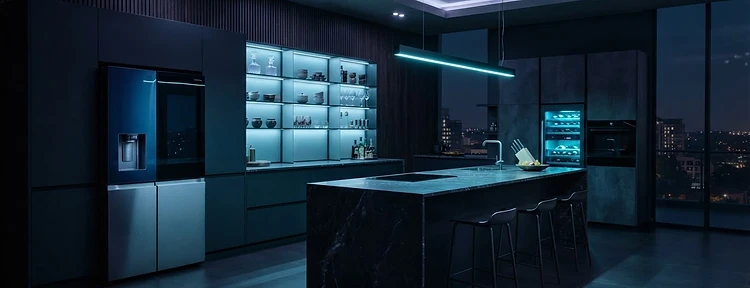
Trusted with R100,000 Bespoke units.
From a Bryanston family French door to a Dainfern Bespoke four-door, we treat every Samsung refrigerator as a masterwork of thermal engineering. Factory-level diagnostic care, genuine Samsung components, no cosmetic damage.
Questions, Answered
Are you affiliated with Samsung?+
How quickly can you reach me?+
Do you use genuine Samsung parts?+
Is there a warranty on repairs?+
Do you quote before starting work?+
Which areas do you cover?+
Your Samsung fridge stops here.
Same-day response across Northern Johannesburg. Genuine Samsung parts. 6-month warranty. Call, WhatsApp or book online now.